
Direct Answer
A corporate card program is a company-funded payment system that issues controlled employee cards, enforces spending limits before checkout, and standardizes month-end expense reconciliation.
Traditional banks underwrite revolving credit lines around US entity credit history. Prepaid virtual card programs instead spend pre-loaded company funds through isolated single-use or reusable cards.
What a Corporate Card Program Controls in Practice
A corporate card program replaces ad-hoc reimbursements and shared founder cards with budget-isolated credentials. Finance sets funding, merchant locks, and spend caps before any checkout authorization happens.
Card rails handle most business payment volume in the United States. The 2025 Federal Reserve Payments Study measured 236.6 billion US noncash payments in 2024 totaling $140.01 trillion. That scope excludes large-value wire transfers. Cards made up 79 percent of transactions by count and 8 percent by value. Credit cards reached 67.1 billion transactions, while debit and prepaid cards totaled 120.6 billion.
Source: Board of Governors of the Federal Reserve System, "2025 Federal Reserve Payments Study (CY 2024 Top-Line Data)" (US noncash payments excluding wires), accessed November 20, 2026.
Most mature US programs combine three card types based on spend cadence and team accountability.
- Travel and entertainment (T&E) cards: Assigned to travelers so airfare, lodging, and meal charges stay off personal bank cards.
- Purchasing cards (P-Cards): Built for recurring supplies and Accounts Payable (AP) invoices without slow purchase-order queues.
- Virtual corporate cards: Digitally issued 16-digit cards tailored for Software as a Service (SaaS) seats, online media buying, and vendor budgets.
Source: J.P. Morgan, "What is a Corporate Credit Card & How Do They Work?" (T&E, P-Card, and virtual card taxonomy), Wikipedia, "Purchasing card" (P-Card accounts payable procurement context), and HaiPay, "Virtual Card Issuing Platform" (virtual business card structure), accessed November 20, 2026.
Program Funding Models: Credit Lines vs. Prepaid Virtual Cards
Corporate card programs split along funding mechanics rather than network logos. A Visa or Mastercard badge can run on corporate credit, bank debit, or pre-loaded stored funds. External card launches rely on BIN sponsorship and an issuer processor.
Consumer Financial Protection Bureau guidance notes that prepaid and debit cards spend already-funded money. Credit cards borrow against a credit line. Once loaded prepaid funds run out, authorizations stop automatically across distributed teams.
Funding Architecture | How Funds Move | Underwriting Requirement | Risk & Isolation Profile |
|---|---|---|---|
Corporate Credit or Charge Card | Issuer extends credit line repaid monthly | US entity credit history or cash review | High spending capacity; shared limit exposure |
Checking-Linked Business Debit | Draws directly from corporate checking account | Business checking account in good standing | Direct cash exposure if card number leaks |
Prepaid Virtual Corporate Card | Spends settled programme or card funds | Business identity and industry screening | Zero credit debt; isolated cap per vendor |
Personal Reimbursement Claim | Employee pays personally and awaits payout | None at issuer; internal expense policy applies | Staff burden and delayed month-end accruals |
Source: Consumer Financial Protection Bureau, "How are prepaid cards, debit cards, and credit cards different?" and first-party issuing documentation, accessed November 20, 2026.
Traditional US bank credit underwriting is often inaccessible for a newer Limited Liability Company (LLC) or cross-border digital business. HaiPay card issuing offers prepaid virtual cards across US, Hong Kong (HK), and Singapore (SG) Visa and Mastercard programmes. Programme labels reflect card structure rather than eligible country lists. Companies registered outside mainland China undergo separate Know Your Customer (KYC) and use-case review.
All three programmes support single-use and reusable cards with 3-D Secure (3DS), Address Verification Service (AVS), Apple Pay, and Google Pay. Cards spend from a shared account balance or hold dedicated per-card funds, while pending funding cannot be spent. Teams seeking an Application Programming Interface (API) to launch external fintech products should read the card issuing infrastructure guide instead.
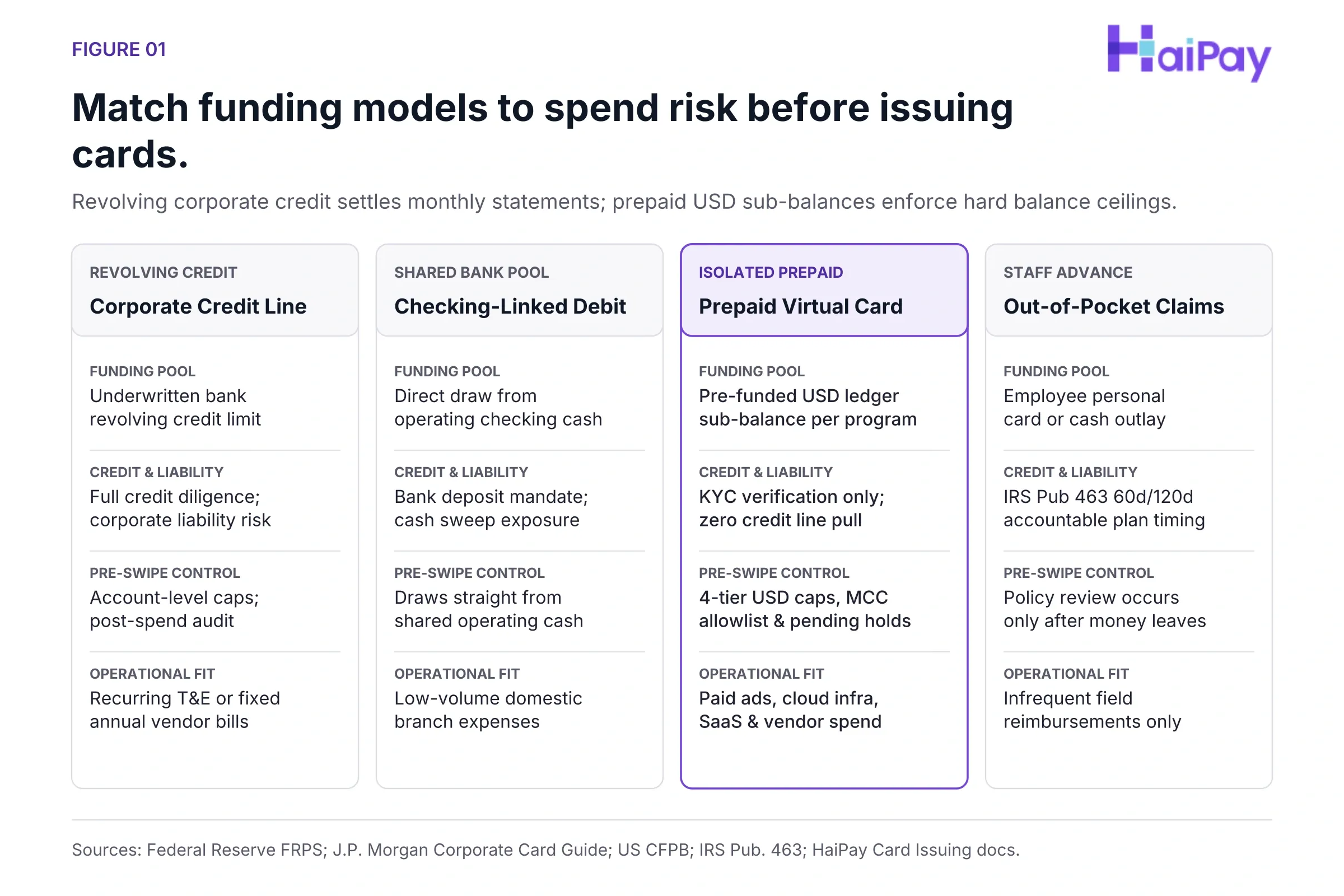
Figure 1: Compare four corporate card funding models.
Source: First-party "Virtual Card Issuing Platform" and "What Is Card Issuing?" guides (US/HK/SG USD prepaid programmes, 3DS/AVS, and eligibility), accessed November 20, 2026.
Designing Spend Controls: Four-Tier Limits, Pending Holds, and Merchant Category Code (MCC) Locks
Effective virtual corporate cards enforce preventive guardrails before clearing instead of chasing policy violations after close. Declines occur most often when admins confuse single-charge caps with period quotas or ignore unsettled holds.
How Four Spending Limits Interact With Pending Authorizations
Inside the HaiPay dashboard, administrators configure four independent limit tiers per card.
- Per-transaction limit: Caps any single charge attempt, blocking surprise invoice spikes or unauthorized upgrades.
- Daily limit: Caps total approved spending within one calendar day. Note that exact daily reset timezone remains unconfirmed.
- Monthly limit: Bounds approved authorizations across a monthly cycle to match department budgets.
- Cumulative limit: Tracks all-time approved spend across cycles rather than summing monthly caps.
Authorized but unsettled transactions immediately occupy both spendable balance and active spend limits. In a worked authorization check, a USD 120.00 pending hold on a USD 150.00 daily cap leaves USD 30.00. That forces an incoming USD 40.00 charge to decline even when monthly and cumulative headroom pass.
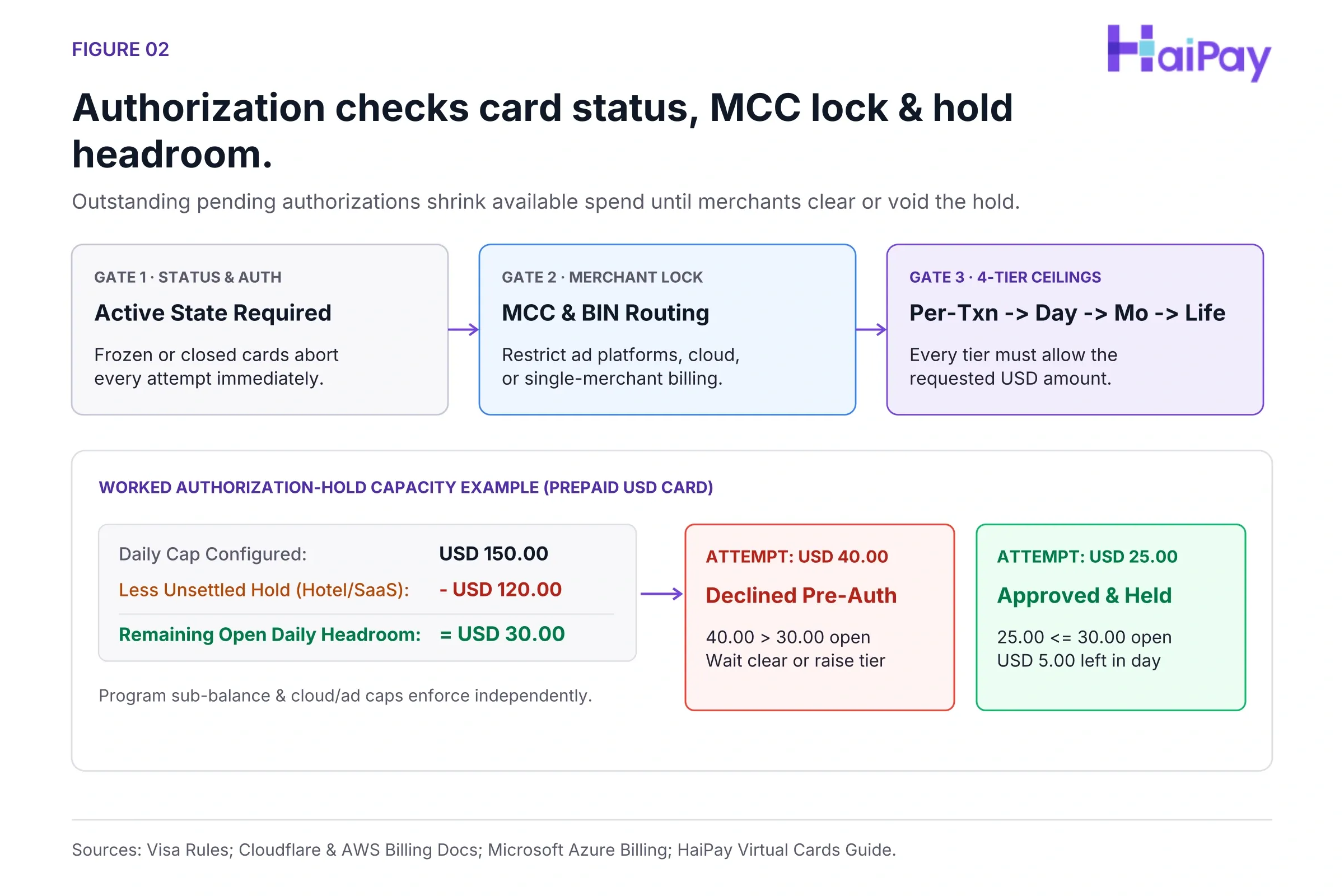
Figure 2: Evaluate card status, MCC lock, and hold headroom.
Source: First-party "Software Subscription Payment Controls" and "Payment Authorization" glossary (4-tier limits and pending holds; daily reset timezone unconfirmed), accessed November 20, 2026.
Authorization-Time Merchant and MCC Locks
Both the dashboard and card issuing API lock cards to one merchant or a four-digit MCC. Visa's October 2026 Merchant Data Standards Manual defines an MCC as a merchant's primary business code by annual local-currency sales volume. Payment taxonomy references also trace that four-digit classification to International Organization for Standardization (ISO) 18245.
Visa lists 5734 for Computer Software Stores, 7372 for Computer Programming and Data Processing Services, and 5812 for Restaurants. Multi-product vendors may bill under an unexpected acquirer MCC. Merchant and category controls evaluate during payment authorization, and an absent backend log entry never proves no attempt occurred.
Source: Visa, "Visa Merchant Data Standards Manual" (October 2026, codes 5734, 7372, 5812) and Wikipedia, "Merchant category code" (ISO 18245 context), accessed November 20, 2026.
Across European Economic Area or United Kingdom (UK) checkouts subject to Payment Services Directive 2 (PSD2) Strong Customer Authentication (SCA), EMV 3-D Secure lets issuing banks verify buyers. External processor docs note that subsequent Merchant-Initiated Transaction (MIT) pulls and corporate virtual card exemptions can skip repeat prompts. Exact challenge behavior depends on merchant setup and issuer rules.
Source: EMVCo, "EMV 3-D Secure" and Adyen Issuing documentation (European PSD2 SCA and corporate exemption framing; external reference only), accessed November 20, 2026.
Vendor Acceptance Gates Before Funding Cards
Virtual card numbers do not hide prepaid Bank Identification Number (BIN) ranges at merchant checkouts. Finance teams must verify vendor prepaid policies and Automated Clearing House (ACH) alternatives before migrating production billing. Compare acquirer vs. issuer roles when triaging checkout blocks.
Platform & Billing Console | Official / Verified Billing Rule | Prepaid / Virtual Risk | Program Decision Rule |
|---|---|---|---|
OpenAI ChatGPT Web Plans | Card must come from OpenAI-supported region and pass 3DS/SCA | Only some plans accept prepaid; HK cards excluded for OpenAI and Anthropic | Check workspace country and confirm eligibility before issuing US or SG card |
OpenAI API Credits | Excludes prepaid cards; hard limit 429 lag applies | Prepaid virtual cards fail at API credit checkout | Keep API credits on a non-prepaid corporate card |
Google Cloud Self-Serve Postpay | Takes credit, debit, or ACH; rejects prepaid cards | Billing failure stops all linked projects and credits | Never bind prepaid cards to Google Cloud billing |
Microsoft Azure Subscriptions | Publicly excludes both prepaid and virtual cards | Threshold checks authorize and reverse without capture | Use traditional bank cards or eligible wire invoices |
AWS Billing & Cost Management | Sweeps unpaid bills on update; locks default delete | Removing exhausted default card fails without backup | Verify backup billing rules before rotating cards |
Meta & Google Media Buying | Automatic threshold billing checks billing country, currency, and AVS | Retry holds consume daily quota and pause campaigns | US programme fits US and other markets; confirm account fit |
Source: Google Cloud Billing, Microsoft Learn Azure Billing, AWS Billing, OpenAI Spend Limits docs, and first-party cloud/AI guides, accessed November 20, 2026.
Check dedicated cloud virtual card rules, AI billing rules, and the advertising card selection checklist before funding new vendor slots.
Accounting Close, External Workflows, and Tax Substantiation
No card dashboard replaces your General Ledger (GL) controls or formal approval chain. Controllers should map which rules enforce inside the portal versus external Enterprise Resource Planning (ERP) accounting workflows.
Program Requirement | Native Card Platform Scope | External Finance Team Workflow | Governance Basis |
|---|---|---|---|
User Access Roles | Multi-user roles in dashboard only; no API role control | Review user permissions quarterly in internal access matrix | Dashboard role scope |
Spend Request Approvals | Not built natively into dashboard or issuing API | Approve budgets via ticket or chat before card issue | External finance process |
Subscription Renewal Alerts | Not built natively; cumulative cap limits total spend | Maintain external cancellation calendar before renewal | External finance calendar |
Admin Operation Logs | Real-time transaction records and decline alerts | Track limit edits and closures in external change log | External audit record |
ERP Ledger Sync | No direct ERP auto-sync; exports 23-column comma-separated values (CSV) | Map card labels to GL codes during month-end import | 23-column CSV export |
Source: First-party product scope confirmation (October 30, 2026) and live card issuing documentation, accessed November 20, 2026.
Apply strict card labels such as Dept-Vendor-Owner in HaiPay when issuing virtual cards for software payments. At close, export the 23-column CSV ledger to match deposits, holds, and settled charges against payment gateway reconciliation, clearing, and settlement.
Raw CSV exports never prove tax deductibility alone. Under Internal Revenue Service (IRS) Publication 463 (2025), an accountable plan requires business connection, accounting within 60 days, and excess return within 120 days.
IRS Publication 463 waives receipts only for non-lodging items under $75. IRS recordkeeping rules require combining statements, receipts, and invoices. Download the 20-row CSV control matrix alongside shared invoice folders to standardize close checks.
Source: Internal Revenue Service, "Publication 463 (2025)" (60-day/120-day safe harbors; USD 75 threshold) and "What kind of records should I keep", accessed November 20, 2026.
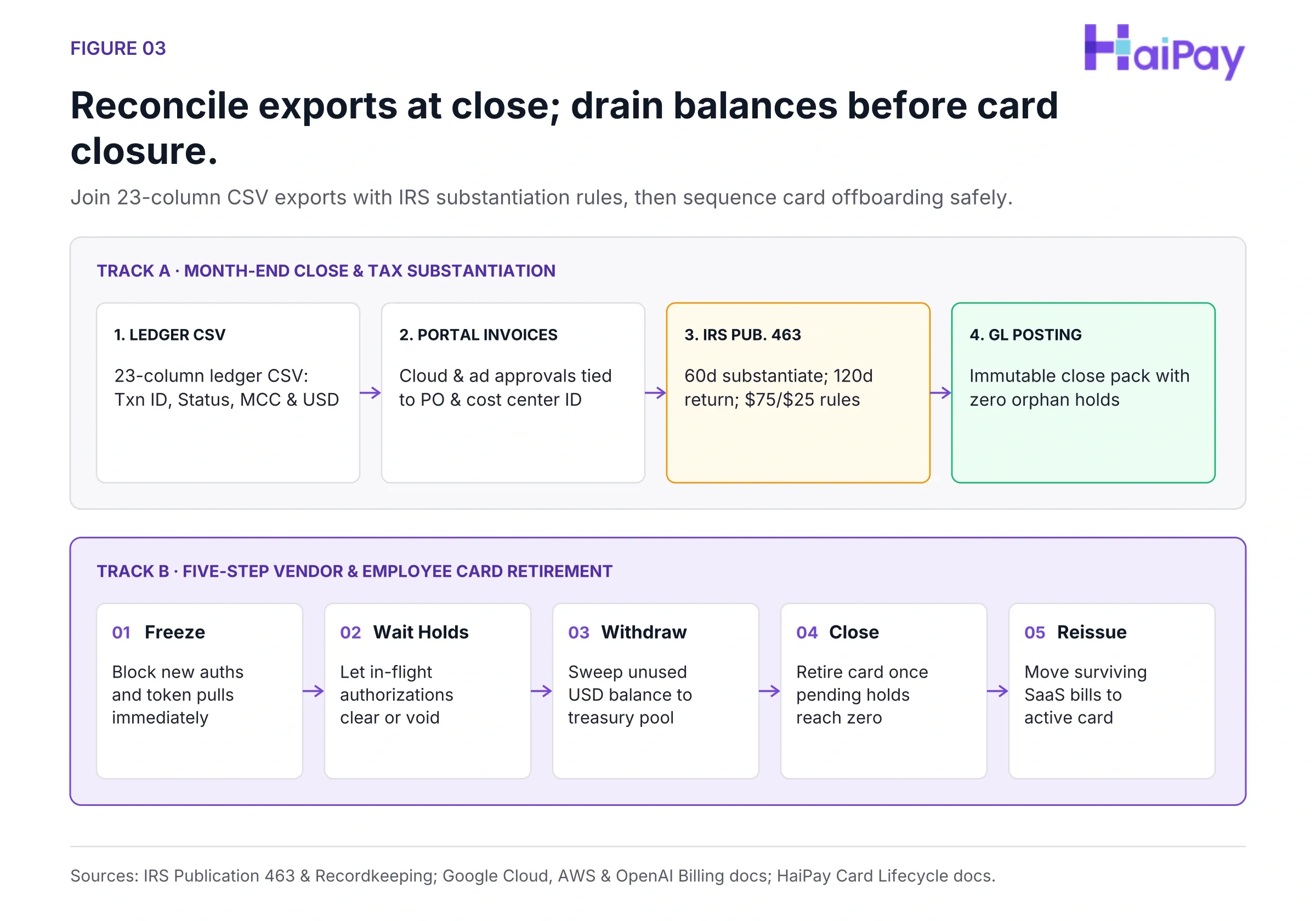
Figure 3: Reconcile 23-column CSV exports and retire cards.
Source: First-party close and offboarding confirmation (October 30, 2026) and IRS Publication 463 (2025), accessed November 20, 2026.
Employee and Vendor Offboarding Sequence
Deleting a card record or handing a Primary Account Number (PAN) to a new hire causes outages and credential leaks. The Payment Card Industry (PCI) Security Standards Council stresses strict process controls. Follow this five-step retirement workflow in exact order.
- Freeze immediately: Switch departing cards to Frozen in the dashboard or API to stop authorizations.
- Settle pending authorizations: Wait for open holds to clear and resolve pending vendor refunds.
- Withdraw available balance: Return remaining spendable card balance back to the shared account.
- Permanently close the card: Confirm refund destination and dispute handling first, because pending refunds cannot be spent.
- Issue a new card: Provision a fresh card number for the replacement owner before retiring backups.
Source: First-party offboarding confirmation (October 30, 2026), issuing FAQ, and PCI Security Standards Council "Merchant Resources", accessed November 20, 2026.
Developers automating card retirement should review the card issuing API checklist and card issuing platforms guide.
Pricing Evaluation and Launch Readiness Checklist
Share five deployment details for a prepaid quote: registration country, target vendors, currencies, monthly spend, and card volume. HaiPay sets no minimum funding, spend, or package commitment; commercial pricing is by quote.
Confirm issuance, funding, ongoing programme fees, authorizations, foreign exchange (FX), exceptions, and tiered rebates. Review our editorial verification policy or pilot via HaiPay card issuing and contact support.
Source: First-party pricing checkpoints and commercial confirmation (October 30, 2026), accessed November 20, 2026.
Disclosure: HaiPay publishes this guide and provides the prepaid USD virtual card programmes discussed above. Content is informational only, not investment, financial, tax, accounting, or legal advice; confirm tax rules with counsel and pricing in a written quote. Verified November 20, 2026.
Sources
- Federal Reserve — 2025 Federal Reserve Payments Study — CY 2024 US noncash volume excluding wires, accessed November 20, 2026.
- CFPB — Prepaid, debit, and credit cards compared — Stored funds vs. credit borrowing, accessed November 20, 2026.
- Visa — Merchant Data Standards Manual (Oct 2026) — MCC definitions and codes 5734, 7372, 5812, accessed November 20, 2026.
- Wikipedia — Merchant category code — ISO 18245 taxonomy background, accessed November 20, 2026.
- Wikipedia — Purchasing card — P-Card accounts payable procurement context, accessed November 20, 2026.
- J.P. Morgan — Corporate Credit Cards & How They Work — T&E, P-Card, and virtual card categories, accessed November 20, 2026.
- IRS — Publication 463 (2025) — Accountable plan 60d/120d harbors and USD 75 threshold, accessed November 20, 2026.
- IRS — Business recordkeeping — Statements, receipts, and invoices, accessed November 20, 2026.
- Google Cloud — Cloud Billing payment methods — Postpay prepaid exclusion and project stop rule, accessed November 20, 2026.
- Microsoft Learn — Azure declined card troubleshooting — Prepaid/virtual exclusion and threshold holds, accessed November 20, 2026.
- AWS Billing — Managing credit cards — Past-due sweep and default-card lock, accessed November 20, 2026.
- OpenAI API Docs — Spend limits — Hard spend limit 429 lag, accessed November 20, 2026.
- EMVCo — EMV 3-D Secure — CNP authentication specification, accessed November 20, 2026.
- Adyen Docs — Issuing 3D Secure — European PSD2 SCA/MIT exemption reference, accessed November 20, 2026.
- PCI SSC — Merchant Resources — Payment data security framework, accessed November 20, 2026.
- HaiPay — Virtual Card Issuing Platform — US/HK/SG programmes, 3DS/AVS, pending funds, pricing, accessed November 20, 2026.
- First-Party Guide — What Is Card Issuing? — Eligibility outside mainland China, accessed November 20, 2026.
- First-Party Guide — Software Subscription Controls — Four-tier caps, pending holds, offboarding, accessed November 20, 2026.
- First-Party Guide — AI Subscription and API Payments — ChatGPT 3DS/region rule and OpenAI API prepaid block, accessed November 20, 2026.
- First-Party Guide — Virtual Cards for Cloud Services — AWS, Google Cloud, Azure payment rules, accessed November 20, 2026.
- First-Party Glossary — Payment Authorization — Authorization checks and hold mechanics, accessed November 20, 2026.
FAQ
A corporate card program sets entity-level liability, employee card controls, and multi-card reconciliation under company rules. Small-business credit cards typically rely on personal credit guarantees and pooled limits with less vendor isolation.
Yes, when a Limited Liability Company (LLC) uses a prepaid virtual card program instead of a United States (US) credit-underwritten line. Companies registered outside mainland China can apply for HaiPay United States Dollar (USD) virtual cards across US, Hong Kong, and Singapore programmes subject to business review.
Digital card format does not change prepaid Bank Identification Number (BIN) classification at merchant checkouts. OpenAI Application Programming Interface (API) credits exclude prepaid cards, Google Cloud Postpay rejects prepaid cards, and Microsoft Azure publicly excludes prepaid and virtual cards.
Authorized but unsettled transactions immediately occupy both spendable balance and active period quotas. Daily limits reset next-day on a system timezone that remains unconfirmed, so repeated retries can trigger declines.
No. Under Internal Revenue Service (IRS) Publication 463 and recordkeeping guidance, teams need a combination of supporting documents including comma-separated values (CSV) statements, receipts, and invoices within 60 days. Non-lodging exceptions under USD 75 exclude lodging.
Freeze the card immediately, wait for pending holds and refunds to settle, withdraw remaining spendable balance, permanently close the card, and issue a fresh card number for the new owner.

Related HaiPay surfaces
Explore the payment stack
Product
HaiPay Card Issuing
Issue USD prepaid virtual cards across US, Hong Kong, and Singapore Visa and Mastercard programmes with merchant and MCC locks.
Guide
What Is Card Issuing?
Understand issuer processors, card networks, and B2B issuing workflows before choosing internal spend tools or API platforms.
Guide
Software Subscription Payment Controls
Configure four-tier virtual card spending limits and four-step card retirement controls for recurring software billing.
Guide
Virtual Cards for Cloud Services
Check dated official payment restrictions for AWS, Google Cloud, and Microsoft Azure before binding virtual or prepaid cards.
Terms in this guide
Glossary terms covered
Issuer Processor
Issuer processor refers to the card-issuing technology provider connecting banks and payment networks to authorize transactions, manage cards, and record clearing data.

Need help mapping your payment stack?
Talk to HaiPay about acquiring, orchestration, local methods, and payout workflows.
Contact us