
Direct Answer
To pay an Indian business from the US, confirm the recipient, compare the full quote, fund the payment and verify the result.
Use the steps below when your US company is paying an Indian supplier’s company account. Keep the invoice, funding transfer and recipient payment connected through one internal reference.
The focus is payment execution. Ask your accounting or legal adviser about tax treatment, withholding and reporting for your particular purchase.
1. Confirm that the route fits a business payment
Before comparing exchange rates, tell each provider who is sending, who is receiving and what the payment buys. Specify a US corporate sender and an Indian company bank account.
Remitly Business explicitly describes US-to-India business-to-business transfers and supplier payments. Money2India publishes a business registration process before its transfer steps. These are useful examples of the business-specific route to look for.
Sources: Remitly, “International business payments to India from the United States” (business-account and supplier-payment scope); ICICI Bank, “Money2India Business Transfers” (business registration). Accessed 5 November 2026. [1] [2]
- Sender onboarding: prepare company registration and constitutional documents (articles of association), entity address, tax details, shareholding and director records, identity and authorization documents, a business description, the merchant agreement and corporate bank account proof.
- Recipient and relationship: state that the destination belongs to an Indian company and explain the commercial relationship between the payer and the recipient.
- Purpose: describe the goods or service, invoice currency and expected payment frequency.
- Approval: obtain confirmation of the permitted use case before treating a quote as an available payment route.
Source: Publisher product-scope statement (merchant onboarding package and payer–recipient relationship review), editorial review 5 November 2026.
A provider’s registration checklist is specific to that provider. Use its current instructions rather than copying another service’s document list.
2. Build one payment record before sending
Assign finance ownership of the invoice and beneficiary details. Assign operations or engineering ownership of submission and status checks. Use the same internal payment reference in both teams’ records.
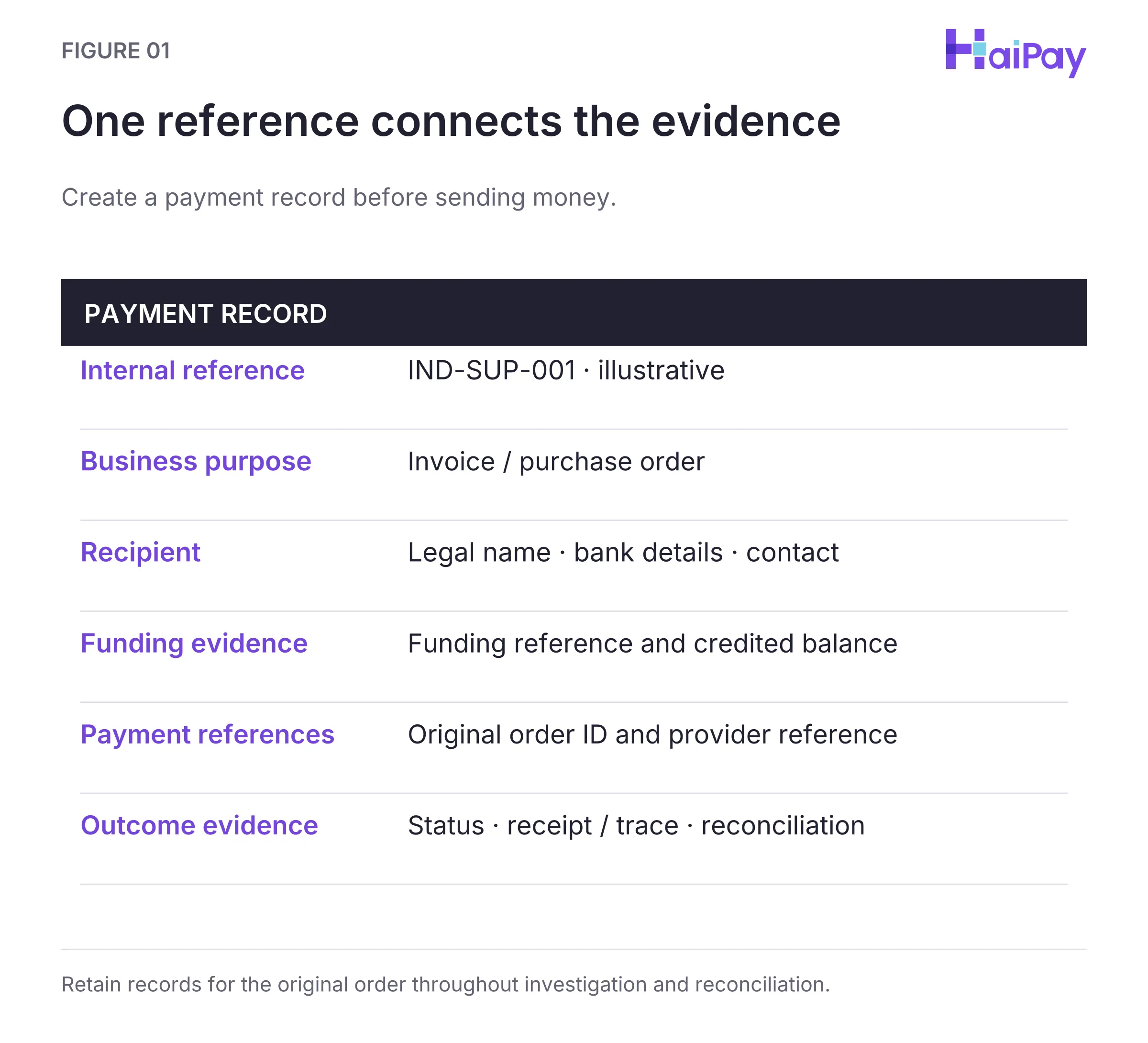
Figure 1: One reference connects the evidence. Retain records for the original order throughout investigation and reconciliation. Open full-size diagram
Record | What to capture | What it helps answer |
|---|---|---|
Business purpose | Supplier legal name, payer–recipient relationship, invoice reference, currency and amount | Which obligation are we paying and why? |
Recipient instructions | Legal name (name), corporate account number (accountNo), IFSC code (bankCode; not BANK or a bank abbreviation), address, contact person, corporate email (email) and 10-digit phone starting with 6–9 (phone) | Where should this Indian company payment go? |
Funding evidence | Company bank reference and credited platform balance | Are funds available for the payout? |
Payment reference | Internal reference and provider order reference | Which existing request should we query? |
Outcome evidence | Latest status, observation time and final payment evidence | What result has actually been confirmed? |
Source: Publisher product-scope statement (Indian business beneficiary requirements) and publisher-created business payment execution record, 5 November 2026. Worksheet labels are planning records, not API parameter names.
Download the payment execution worksheet and fill it from your invoice, approved instructions and actual provider records. Confirm any changed account details with the supplier’s named contact before submission.
3. Compare quotes for the same amount received
Choose a target amount in Indian rupees (INR), then request quotes for that same recipient amount. Record the US-dollar (USD) debit and who pays the fees.
For example, use “the supplier receives INR 50,000” as a comparison target if that matches your invoice. This is an illustrative amount, not a published limit, quote or promised payout.
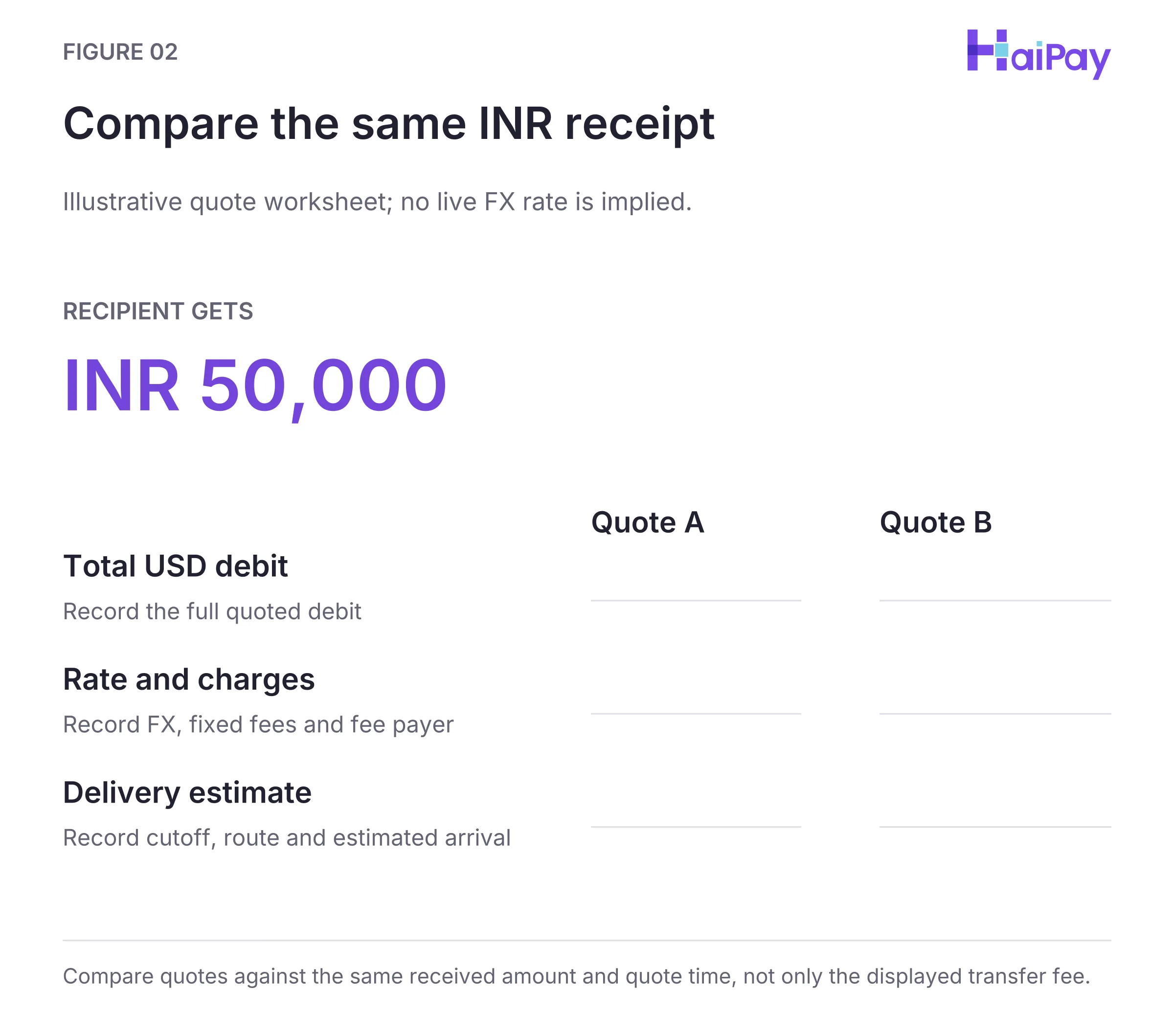
Figure 2: Compare the same INR receipt. Compare quotes against the same received amount and quote time, not only the displayed transfer fee. Open full-size diagram
Compare | Record explicitly |
|---|---|
Recipient amount | Expected INR receipt and whether deductions remain possible |
Sender debit | USD principal, separately charged fees and known funding costs |
Foreign exchange (FX) | The currency conversion rate, its direction and the quote time |
Other costs | Currency, payer and whether the amount is known |
Timing | When the estimate starts and which event marks completion |
Source: Publisher-created quote comparison worksheet, 5 November 2026. This is a comparison method, not a current provider price table.
Add only costs expressed in the same currency. Leave unknown charges marked unknown. If an exchange margin is already embedded in the quoted rate, do not add it again as a separate fee.
Read the quote’s conditions
Remitly’s business page separates the USD send amount, INR receipt, fee and total. Its caveat also says additional fees or taxes may apply and displayed rates can change. Save the actual quote and its conditions.
Source: Remitly, “International business payments to India from the United States” (quote fields and pricing caveat), accessed 5 November 2026. [1]
4. Separate funding from the supplier payout
For HaiPay’s described payout service, the merchant transfers USD from its company account to the platform’s corporate account. Credited funds form the payout balance; currency conversion occurs when the payout is initiated.
Collection funds and payout prefunding are accounted for separately. Do not plan a supplier payment on the assumption that customer collections automatically move into the payout balance.
Source: Publisher product-scope statement (India payout funding and separate balances), editorial review 5 November 2026. Based on supplied product-owner confirmations; not an independent payment test.
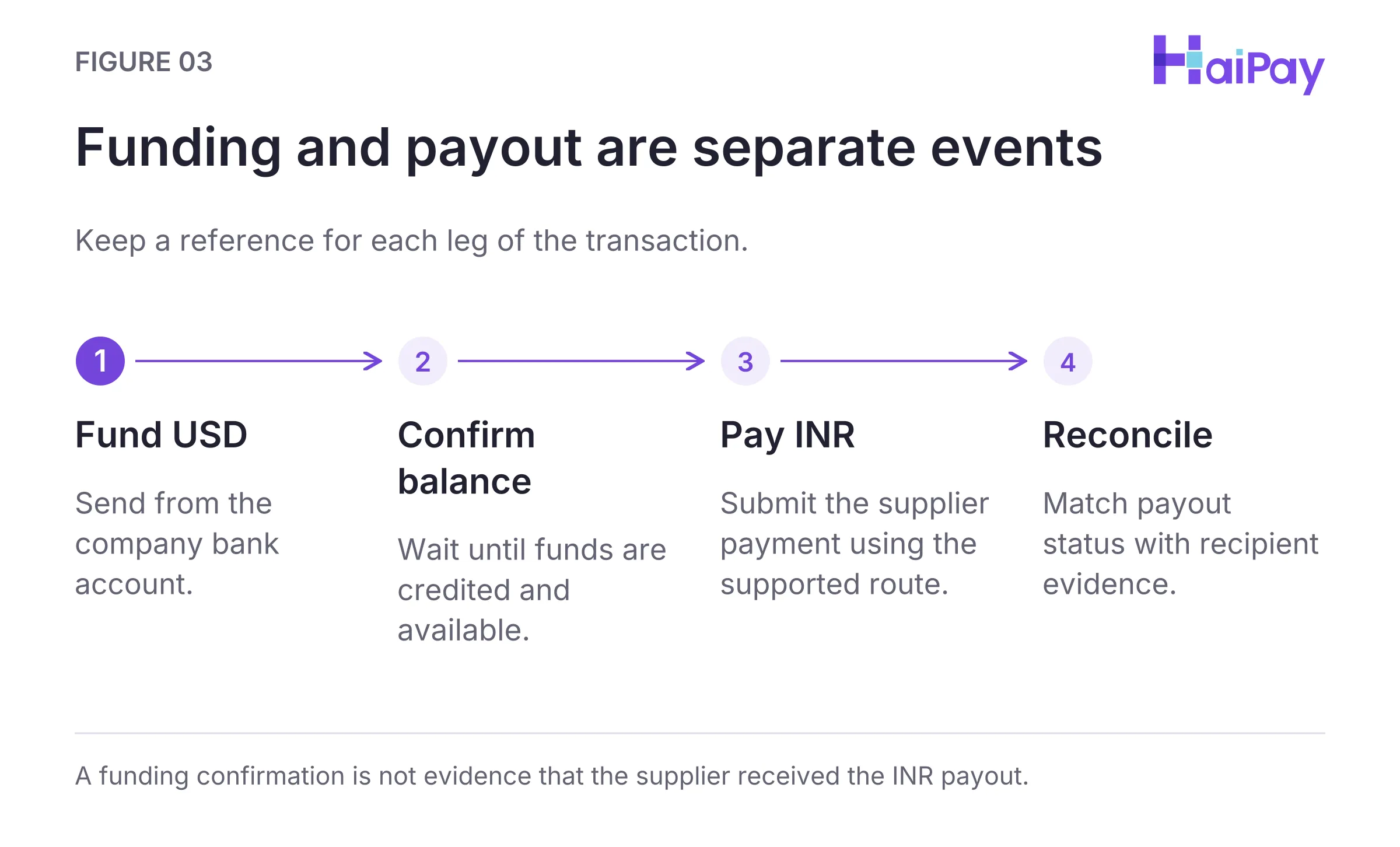
Figure 3: Funding and payout are separate events. A funding confirmation is not evidence that the supplier received the INR payout. Open full-size diagram
A funding transfer confirmation answers a different question from a supplier payment result. Keep both references, and check that the payout balance is available before issuing the recipient payment.
Ask the provider whether a quoted delivery estimate begins with your funding transfer, available balance or payout submission. Use that agreed starting event when planning an invoice due date.
5. Submit once, then follow the original order
The product scope supports individual requests through an application programming interface (API), batch API requests and dashboard uploads. Choose the enabled method that fits your payment volume and approval process.
Before submitting, put the recipient bank account number in accountNo and the account’s IFSC code in bankCode, rather than BANK or a bank abbreviation. The name field accepts the company legal name, email accepts a corporate email address (not limited to Gmail) and phone requires a 10-digit number starting with 6 through 9.
Source: Publisher product-scope statement (submission methods, beneficiary fields and merchant-specific conditions), editorial review 5 November 2026.
Observed situation | Recommended next action |
|---|---|
Submission acknowledged, final result unavailable | Retain the reference and query the original order. Keep the payment unresolved. |
Request times out or the result is unclear | Check the original order and escalate uncertainty before sending another payment. |
Failure confirmed | Read the reason, check any balance adjustment and follow the documented retry procedure. |
Success confirmed | Save the final record, then match its recipient, amount and reference to the invoice. |
Source: Publisher-created execution record and product-scope statement, 5 November 2026. These are operational review categories, not API status names.
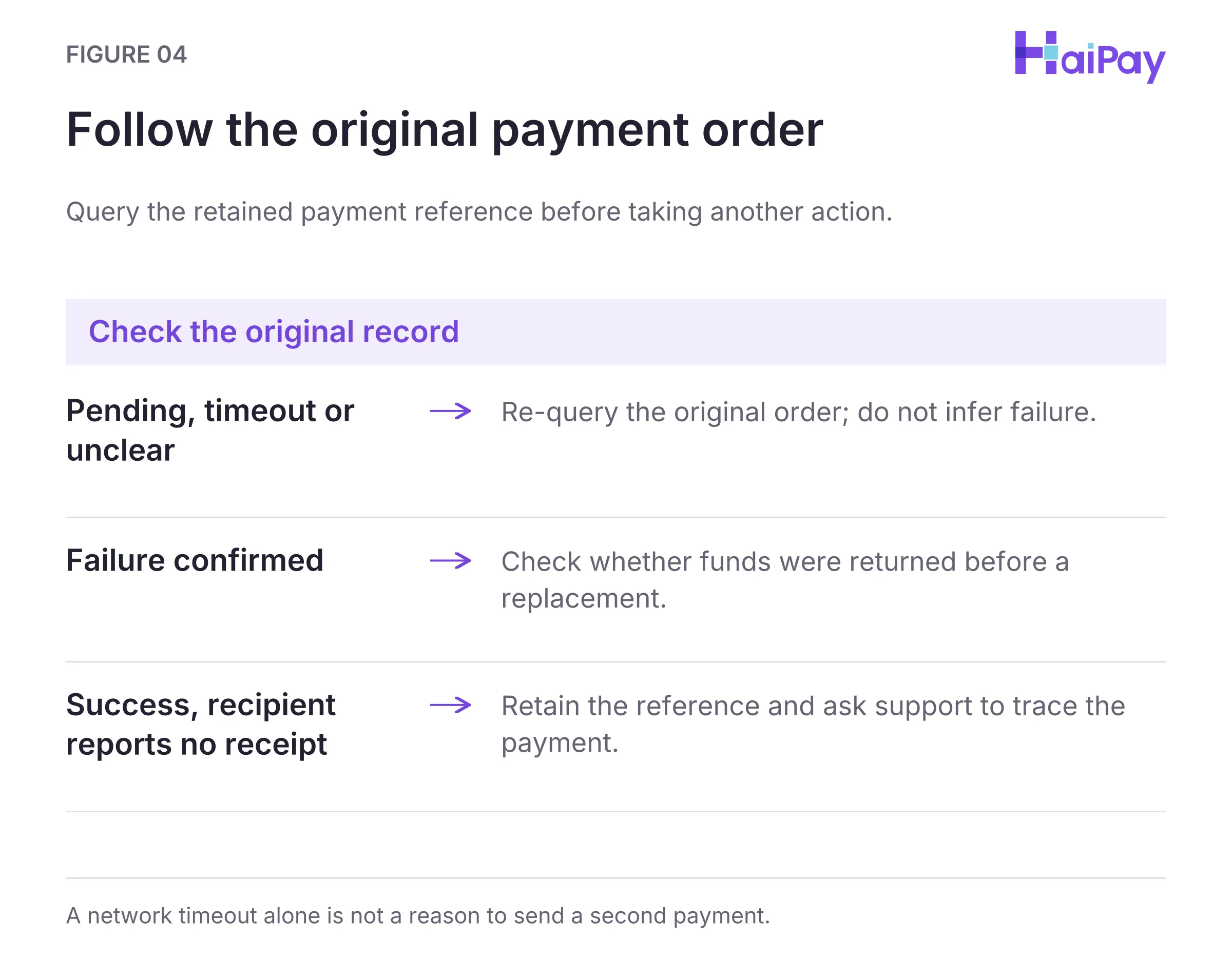
Figure 4: Follow the original payment order. A network timeout alone is not a reason to send a second payment. Open full-size diagram
Do not use a network timeout as proof of failure. If the supplier reports non-receipt after a successful result, preserve the original evidence and ask support to trace it before considering a replacement.
For integration planning, review the API integration overview. Confirm account-specific fields and retry rules during technical setup.
6. Close the invoice with evidence
Match the invoice to the final payment record, including the intended company, amount and reference. Keep bank receipt evidence separately when available. Leave any unexplained difference open with a named owner.
Use the worksheet to record the funding movement, payout debit, fees and any returned balance. Record actual figures from each system rather than copying an estimate from the original quote.
- Finance: reconcile the invoice, fees and currency amounts.
- Operations: resolve missing confirmations and supplier questions.
- Engineering: investigate missing or conflicting status updates against the original order reference.
The payment reconciliation guide explains how to compare orders, provider records and bank movements. Use it for the broader reconciliation process; this worksheet keeps the India supplier payment together.
Check whether this route fits your business
HaiPay supports India bank payouts to company suppliers, subject to business approval. Companies registered outside mainland China may apply without an Indian company or Indian bank account.
Fees, limits and processing expectations depend on the merchant and enabled route. The product overview is not a transaction quote or a guarantee of approval.
Source: Publisher product-scope statement (company recipients, applicant scope and commercial conditions), editorial review 5 November 2026.
Prepare your review request
Request a review of your US-to-India business payment. Include your company’s registration country, business description, relationship to the Indian recipient, payment purpose, expected frequency and typical amount. Ask for the onboarding checklist, funding instructions and fee-payer options in the response.
Disclosure: This guide is published by a payment provider describing its own service. The worksheets are planning tools, not transaction-test results. It provides operational guidance, not investment, tax or legal advice.
Sources
- Remitly Business: international business payments to India from the United States. Business-account scope, quote fields and pricing caveats. Accessed 5 November 2026.
- ICICI Bank: Money2India Business Transfers. Business registration and transfer workflow. Accessed 5 November 2026.
- HaiPay: India business payout product-scope statement. Publisher statements supplied for this project; editorial review 5 November 2026. No independent performance test.
- Business payment execution record and India payment quote comparison worksheet. Original editorial templates created 5 November 2026.
FAQ
Business transfer services offer this route. Confirm that your chosen service accepts your US entity, the Indian company account, the payment purpose and the relationship between payer and recipient. Product availability does not guarantee approval for a particular transaction.
For the service described here, companies registered outside mainland China may apply without an Indian company or bank account. Onboarding requires company registration and constitutional documents, entity address, tax details, shareholding and director records, identity and authorization documents, a business description, a merchant agreement and bank account proof.
For an Indian business beneficiary under this service, collect the legal company name, corporate bank account name and account number, Indian Financial System Code (IFSC), address and contact person, and explain the payer–recipient relationship. In the submission fields, enter the bank account number in accountNo and the IFSC code in bankCode, rather than BANK or a bank abbreviation. The name field supports the company legal name, email accepts a corporate email address (not limited to Gmail) and phone uses a 10-digit number starting with 6 through 9.
Use the same intended recipient amount in Indian rupees. Compare the total known US-dollar debit, separately identify other currencies and record any unknown charges. Keep the quote time and fee-payer choice alongside the figures.
Query the original order and retain its reference. Ask support to resolve an unclear result before creating another payment. An unknown outcome is not evidence that the first payment failed.
Do not assume so. Under the product scope described here, collection funds and payout prefunding are accounted for separately. Confirm the funding instructions for your payout account before planning supplier payments.

Related HaiPay surfaces
Explore the payment stack
Product
Mass payouts
Explore outgoing payment capabilities and discuss your recipient scope.
Product
API integration
Plan the technical connection for your approved payment route.
Guide
Payment reconciliation
Match orders, provider records and bank movements.

Need help mapping your payment stack?
Talk to HaiPay about acquiring, orchestration, local methods, and payout workflows.
Contact us