NewsLocal Payments
U.S. Publishes X9.150 Standard for Interoperable QR Code Payments
The Accredited Standards Committee X9 has published X9.150, a new U.S. standard designed to make merchant-presented QR codes interoperable across multiple account-based payment rails. The framework could provide a more consistent checkout layer for FedNow, RTP, ACH credit transfers and emerging digital payment methods.
Key takeaways 3
- X9.150 establishes a common U.S. format for secure merchant-presented payment QR codes.
- One compliant QR experience may support multiple account-based rails, including FedNow, RTP and ACH credit transfers.
- The standard has been published, but broad availability still depends on implementation by banks, wallets, merchants and processors.
What happened
The Accredited Standards Committee X9 has published X9.150, Merchant-Presented QR Codes for Secure Payment, a new American national standard for initiating secure account-to-account payments through dynamically generated QR codes.
X9 is accredited by the American National Standards Institute to develop financial-services standards in the United States. According to the organisation, X9.150 is intended to address a major gap in the U.S. instant-payment market: the absence of a common, secure and interoperable QR-code format that banks, wallets, merchants and payment providers can implement across different networks.
Under the new framework, a merchant or biller generates a payment QR code. The customer scans that code from within an authenticated banking or wallet application, reviews the payment details and authorises a push payment.
This is different from a conventional static URL QR code. X9.150 defines the payment payload, data fields, message structure, notification requirements and security controls needed to initiate and process a payment.
The standard also supports digital signatures using public-key infrastructure, helping participating applications verify the integrity and origin of the payment instructions.
Why it matters
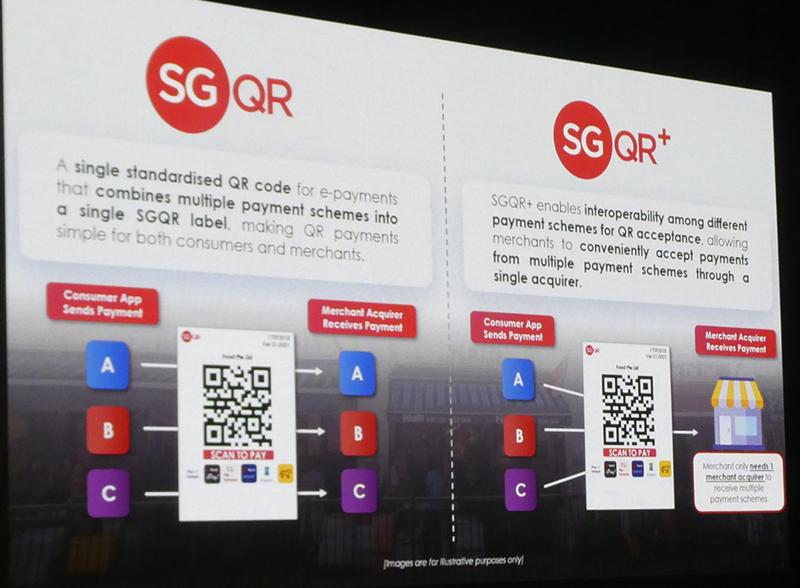
The United States already has several account-based payment rails, including FedNow, the RTP Network and ACH credit transfers. However, those back-end networks do not automatically provide merchants and consumers with one consistent way to initiate a payment at checkout.
X9.150 is designed to provide that common front-end layer.
The same merchant-presented QR code could potentially initiate a payment over different supported rails. A financial institution or payment provider could determine whether the transaction should move through FedNow, RTP, an ACH credit transfer or another compatible payment method.
X9 also identifies emerging digital-money networks, including stablecoin-based systems, as a possible future use case. This does not mean that every X9.150 QR code currently supports stablecoins. Actual availability will depend on the financial institutions, wallets, processors and networks that implement the standard.
The development could make account-to-account payments easier to present at physical checkouts, ecommerce payment pages, invoices and billing workflows without requiring merchants to display a separate QR code for every participating network.
Impact on merchants, platforms and payment teams
For merchants, the potential benefit is not limited to payment speed. A standardised QR payload can carry structured merchant, invoice and transaction information alongside the payment request.
That could support:
- Faster payment confirmation
- More automated matching of incoming payments to orders or invoices
- Improved cash-position visibility
- More consistent payment-status notifications
- Reduced dependence on manual reconciliation
- A unified customer experience across multiple account-based rails
The standard may also give payment providers more flexibility over routing. The customer could see one familiar QR payment flow while the provider selects an appropriate supported network behind the scenes.
However, publication of the standard does not create immediate universal acceptance. Banks must add compatible scanning and payment functions to their applications. Merchants and billing platforms must generate compliant QR codes, while processors need to support the corresponding payloads, notifications and exception workflows.
Payment teams will also need clear rules covering refunds, transaction reversals, mistaken payments, fraud claims and customer support. Push payments can have different dispute and recovery characteristics from card payments, so merchants should not assume that existing card chargeback processes apply unchanged.
What to watch next
The next stage will be implementation rather than standard-setting.
Important indicators will include:
- Which banks and wallet providers add X9.150 scanning
- Whether major processors certify compatible solutions
- Support across FedNow, RTP and ACH payment journeys
- Merchant adoption in ecommerce, billing and physical retail
- Rules for refunds, liability and exception handling
- Consumer education around scanning payment codes only inside trusted applications
- Whether emerging stablecoin networks implement compatible payment flows
X9.150 establishes a shared technical foundation, but interoperability on paper is not the same as interoperability in the market.
Its long-term significance will depend on whether banks, processors, merchants and consumers adopt the framework at sufficient scale. If adoption grows, the standard could help U.S. instant payments move beyond back-end bank connectivity and into a more recognisable everyday checkout experience.
Data highlight
4 payment rail categories
Payment rail categories explicitly identified as compatible examples under the X9.150 QR code framework
At publication on 14 July 2026
Counted from the payment categories explicitly named by ASC X9: FedNow, RTP, ACH credit transfers and emerging digital payment methods such as stablecoins. This measures the standard’s stated coverage, not live adoption or transaction volume.
“Clear, consistent standards like X9.150 make it easier for everyone to trust the payment experience.”
Term definition
- Merchant-presented QR code
- A payment code generated and displayed by a merchant or biller for a customer to scan and authorise through a supported application.
4 sources
- Accredited Standards Committee X9
- PYMNTS
New X9.150 QR Standard Unlocks U.S. Instant Payments at Checkout
- American National Standards Institute
ANSI X9.150-2026: Payment QR Code Standard — Merchant-Presented QR Codes for Secure Payment
- Digital Transactions
A New QR Code Standard Could Boost Instant Payments, X9 Committee Says
How to cite
HaiPay News, "U.S. Publishes X9.150 Standard for Interoperable QR Code Payments", https://www.haipay.net/news/us-x9-150-interoperable-qr-code-payment-standard, 15 July 2026