Bluecode Launches NFC Payments on iOS and Android via Discover Network
European mobile payment system Bluecode has launched NFC payments across both iOS and Android through a collaboration with Discover Network. The integration is intended to give participating banks and wallet providers broader contactless acceptance while keeping Bluecode credentials, token services and core transaction processing within European infrastructure.
June 24th, 2026
Last updated: June 24
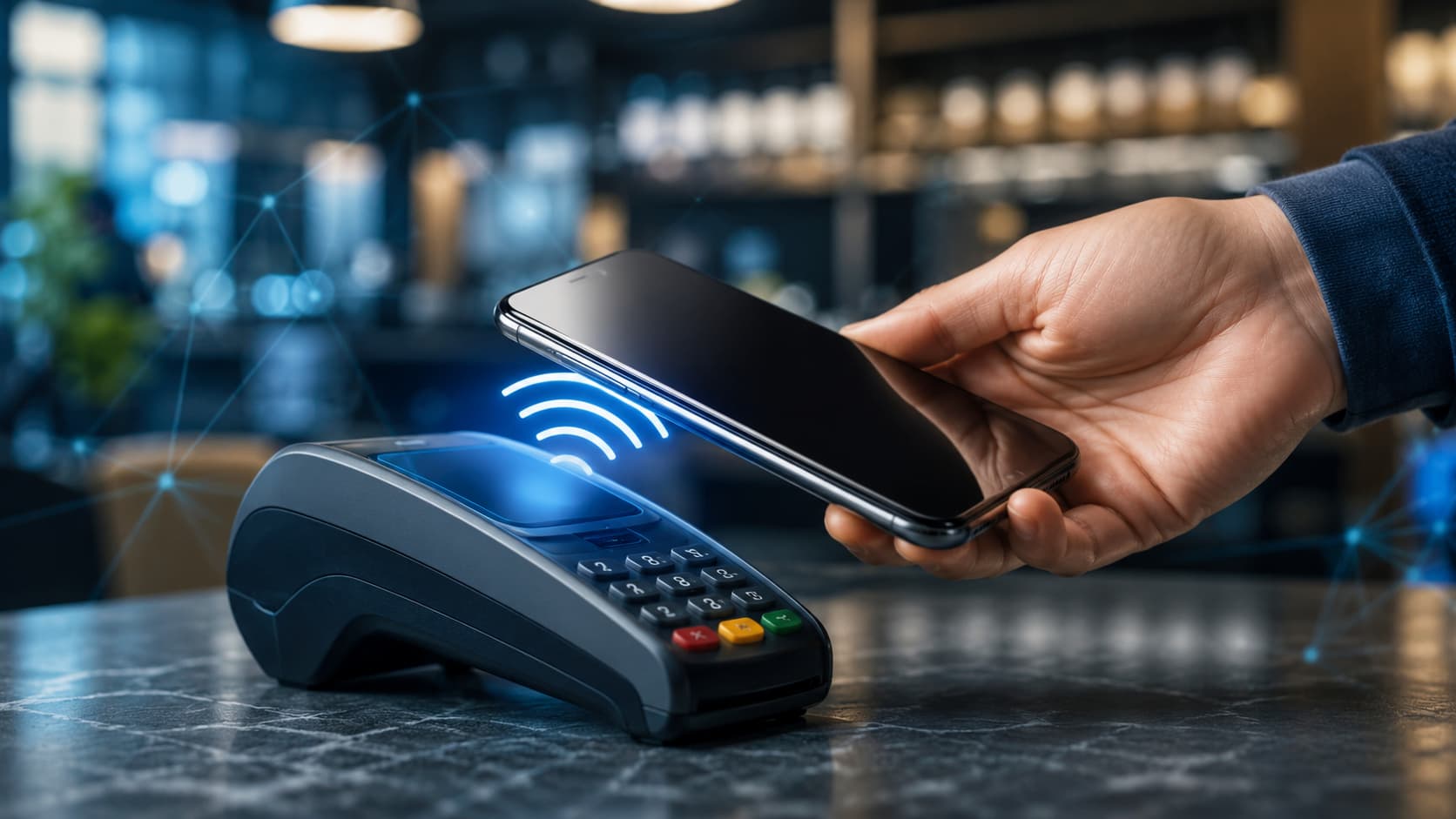
NFC payments go live across both mobile platforms
Bluecode announced on June 23, 2026, that its NFC payment solution is now live on both iOS and Android.
The launch allows participating issuing banks and wallet providers to add contactless payments to their existing mobile applications. Users can then initiate an account-based payment by holding a supported smartphone near an NFC-enabled terminal.
The company already supports barcode and QR-code payments. Adding NFC gives issuing partners another payment interface that is familiar to consumers and widely supported by physical payment terminals.
The significance of the launch is not only that Bluecode has added contactless payments, but that a European account-based wallet can now connect with a wider international acceptance network.
The first issuing partners have integrated the new functionality, with the initial rollout focused on payments across the eurozone.
Discover Network provides wider acceptance
Bluecode is using Discover Network and Diners Club International infrastructure to extend the acceptance of its NFC payment credentials.
Discover Network maintains more than 30 network alliances worldwide, including connections with domestic payment schemes such as RuPay in India, Elo in Brazil and Troy in Türkiye.
Through this alliance structure, Bluecode says participating banks can give users access to millions of payment locations.
The arrangement is part of what Bluecode calls “Payment Roaming.” The model is designed to make a domestic or regional payment system interoperable with other national and international networks without requiring it to abandon its own payment identity.
Payment roaming allows a local wallet or payment scheme to use external acceptance infrastructure while keeping the original scheme visible to issuers and users.
For European banks, this offers a potential way to expand wallet acceptance without building an independent merchant network in every market.
Bluecode keeps the core payment layer in Europe
Bluecode says its NFC solution is built on a European software development kit and a European token service.
According to the company, transaction processing remains within the Bluecode scheme and its European infrastructure. Bluecode also states that payment data and transaction fees do not leave Europe through the core processing arrangement.
This structure is central to the company’s payment-sovereignty positioning.
The user may pay at a terminal connected to a wider acceptance network, but the credential is still issued through Bluecode, and the underlying account-based payment remains associated with the Bluecode scheme.
The model separates international acceptance from ownership of the wallet, token and core processing environment.
That distinction is becoming increasingly important as European banks and payment providers look for ways to expand mobile payment coverage while retaining more control over customer relationships, payment data and processing rules.
Account-based NFC gives banks another wallet option
Many contactless wallets rely on credentials linked to global card schemes. Bluecode’s model is designed around account-based payments that can be embedded in bank, partner or digital-wallet applications.
For issuing banks, the NFC capability can reduce the need to launch a completely separate payment application. Bluecode technology can be integrated into an existing banking or wallet interface.
Banks can potentially offer several payment interfaces within the same environment:
- NFC for contactless terminal payments
- QR codes for compatible merchants
- Barcodes for supported acceptance scenarios
- Direct account-linked payment credentials
This gives issuers more flexibility in deciding how users access the payment method across different devices and merchant environments.
However, actual availability will depend on whether a user’s bank or wallet provider has completed the Bluecode integration.
Interoperability is becoming a strategic payment issue
European payment providers have historically faced a trade-off between local control and international acceptance.
A domestic wallet may provide strong local coverage, familiar user experiences and region-specific compliance. Its usefulness can decline when users travel or when merchants operate across several markets.
Connecting a local payment system to an international network offers a possible route around that limitation.
Instead of replacing a local scheme with a global wallet, interoperability allows the local scheme to extend its reach through shared acceptance infrastructure.
Bluecode’s NFC launch illustrates how this model can work at the mobile-wallet layer.
It also shows that payment sovereignty does not necessarily require every participant to build a separate terminal network. Local schemes can retain control over issuance, credentials and processing while using network partnerships to reach more merchants.
What merchants should watch
For merchants, the immediate integration impact may be limited if the new wallet credentials can be accepted through existing NFC terminals and acquiring connections.
However, wider technical acceptance does not automatically mean identical commercial or operational treatment.
Merchants and payment providers still need to clarify:
- Which acquiring connections support the wallet
- In which countries the service is active
- How the payment method appears in transaction reports
- How refunds and reversals are processed
- Which entity manages disputes
- How settlement and reconciliation are handled
- Whether customer recognition differs from card transactions
The initial deployment is focused on the eurozone and depends on participating issuing partners. Merchants should therefore distinguish between network-level acceptance capability and actual user availability in a specific market.
What the launch signals for digital wallets
The Bluecode–Discover collaboration reflects a wider shift in digital-wallet development.
Wallet providers are increasingly competing on more than the front-end payment experience. Their value also depends on issuer participation, token infrastructure, cross-border interoperability, merchant acceptance and control over payment data.
For local and regional payment methods, access to wider acceptance networks can reduce one of the main barriers to expansion.
For merchants, the result may be a more fragmented payment environment behind a familiar NFC checkout experience. Several wallets and account-based methods could reach the same terminal while following different processing, settlement and reporting paths.
As wallet interoperability expands, unified transaction management and reconciliation will become as important as front-end acceptance.
Businesses operating across multiple markets will need payment systems that can identify different wallet types, maintain consistent order statuses and consolidate settlement and reconciliation data across local and international payment routes.
How to cite
HaiPay News, "Bluecode Launches NFC Payments on iOS and Android via Discover Network", https://www.haipay.net/news/bluecode-nfc-payments-ios-android-discover-network, June 24th, 2026
2 sources

Discover More

Viva.com Joins EPI and Adds Wero to Its European Payment Platform
5 sources
Visa Launches Platform for Stablecoin Minting, Movement and Management
4 sources
Klarna and Bolt Expand In-App Payments Across Four European Markets
2 sources
ACI Worldwide Joins EPI to Bring Wero to Its Payments Platform
4 sources
